Choosing between a nearer secondary school and a more competitive one
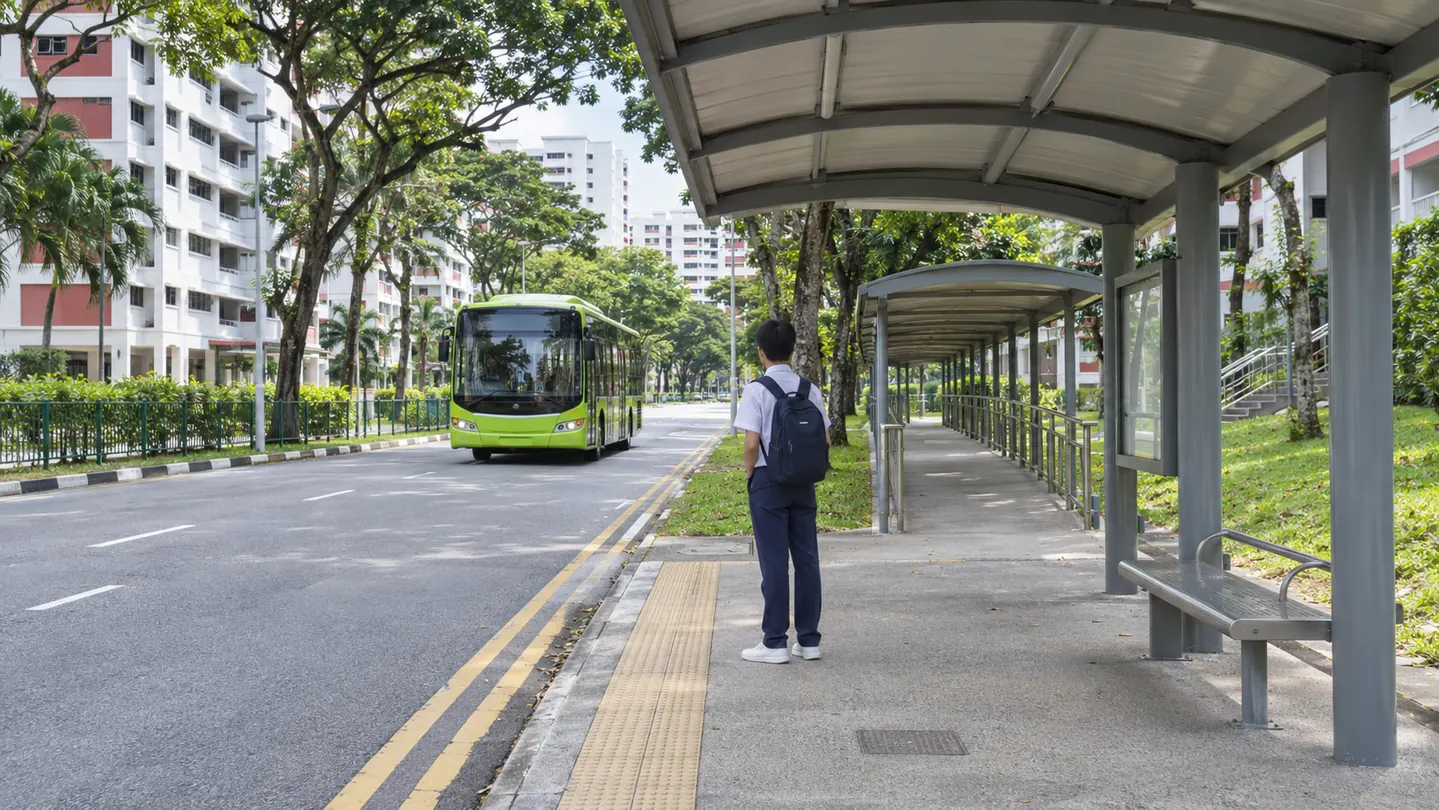
If both schools meet your child’s needs, I’d favour the nearer one unless the farther school offers a clear educational benefit your child wants and can realistically use. That could be a suitable pathway, deeper work in a favourite subject, or a CCA with the coaching and opportunities they’re looking for.
A more demanding cut-off point alone doesn’t settle that comparison. Equally, two schools offering the same subjects can give your child different experiences.
Suppose the farther journey adds 20 minutes each way. Across 5 school days, that’s 3 hours 20 minutes a week. A sustained interest might justify that time; an impressive programme your child is unlikely to join is a much weaker reason.
Use our secondary school directory to shortlist schools. Then compare them in this order.
1. Check what must work at either school
Start with eligibility and the right education pathway. If you’re considering the Singapore-Cambridge Secondary Education Certificate (SEC) programme and the Integrated Programme (IP), understand the different routes and commitments described in MOE’s school-choice guide. Choose a route that suits how your child learns and the options they want to keep open.
Within that route, check subject levels and upper-secondary combinations. A school listing Physics and Geography doesn’t establish that your child can take both in their preferred combination. Ask for the current combination sheet, qualifying criteria and any restrictions; confirm what the school can say about your child’s intake.
Put necessary support here too. If your child needs specific learning, accessibility or wellbeing arrangements, discuss those needs with the relevant staff before treating either school as workable. Check school fees, travel and programme costs against your family’s budget.
These are requirements, not points to trade for a shorter journey or a famous CCA. A future subject allocation also can’t be promised before your child’s interests and results develop.
2. Identify the gains your child would use
Choose the 1 or 2 differences that matter most to your child. For an undecided 12-year-old, room to try several interests can matter more than specialising early.
For academic interests, look beyond subject names: sustained projects, challenging enrichment, research or mentorship may offer something your child wants. Establish who gets those opportunities, how students enter, and how often they participate. A one-off workshop and a year-long project make different demands and offer different experiences.
For a CCA, compare the actual activity at both schools. Look for progression in skills, coaching, rehearsal or training time, and opportunities to perform, compete or lead. A strong competition record is useful context, but your child’s experience also depends on what members outside the representative team get to do.
For example, Pei Hwa Secondary School describes school-wide, interest-based and talent-development tiers in its Robotics and Programming Applied Learning Programme. Its page distinguishes a level-wide making challenge from Maker Monday, an interest group. Those are different kinds of access. Ask which activities your child could join, how often they’d participate, and how they’d progress; make the same checks at the other school.
The learning environment matters alongside the programme. Your child may enjoy peers who share a serious interest, frequent discussion or a demanding project group. Another child may prefer more guided practice while building confidence. Look at work students do together and let your child explain what appeals to them; a COP doesn’t establish the classroom pace, peer relationships or teaching quality.
I’d be wary of our own tendency to collect impressive programme names. Write down what your child would actually do there.
3. Ask questions that expose the differences
I visited 2 secondary school open houses last weekend and shared this YouTube Short. Going in person gives you and your child a feel for the place, including the interactions between students and teachers.
Notice how students speak to one another, how teachers respond when students approach them, and whether your child feels comfortable joining a conversation. Those impressions can help you compare the schools, though an open house gives you only a small view of everyday school life.
Use our October and November open-house calendar to plan visits, checking the school’s own event and registration details first. Some visits have already passed; use published school contacts for follow-up questions.
Take the questions relevant to your child’s priorities and ask them at both schools:
- Subject teacher: “Could you show us the current combinations containing [the subjects my child is interested in], and the criteria for taking them?” Record the combination and conditions, rather than just ticking off individual subjects.
- Programme teacher: “For [named programme], which parts do all students experience, and how are students chosen for further work? Could you show us a recent project and explain who took part?” Record participation, selection and progression. Ask which details are confirmed for the incoming cohort.
- CCA teacher and a current member: “How are new members allocated or selected? What would a member who isn’t on the competition team do in a normal week?” Ask for training days, finish times, venues and extra sessions before events. Compare regular participation and coaching as well as awards.
- Secondary 1 teacher or student: “Could you describe a recent assignment or group project, how students worked on it, and the help they could use?” Let your child consider whether that kind of work sounds engaging and manageable. One example is a conversation starter, not a measure of the whole school.
- Relevant support staff or subject teacher, if needed: Describe your child’s specific need privately. Ask what arrangement the school could provide, who would provide it and when it would take place. “We support every child” leaves the comparison unanswered.
A student can describe their experience; a teacher can explain allocation rules and planned provision. Ask the appropriate person, keep a link or note of the answer, and mark unresolved points as “unknown”. Use the answers to make your own comparison.
A visit can’t establish teaching quality across a school. Anonymous reviews can suggest things to investigate, but they’re not verified ratings of teachers or school culture.
4. Test whether the whole week works
Set those gains against the time and energy the journey takes. A weekend drive to an open house won’t tell you enough about the public-transport journey your child would make.
- Confirm the campus, reporting time and student gate. Get ordinary dismissal times and the likely after-school schedule for the activities you’re comparing. CCA participation is compulsory in secondary school, so include it from the start.
- Try the morning route at the intended time, accompanying your child while they learn it. Count walking, waiting, transfers and the margin before reporting time. Repeat an unusually smooth trial; holiday traffic may understate the term-time journey.
- Check the trip home after ordinary dismissal and after CCA, including travel from any external venue. Notice crowded transfers and awkward crossings as well as total minutes.
- Work backwards to wake-up time, then forwards to dinner, homework and bedtime. Include a backup for disruption and days when no parent can give a lift.
A direct bus can feel different from several transfers. Let your child say which parts feel manageable, and check the week leaves room for sleep, recovery and interests outside school.
Here’s a hypothetical trade-off. If the farther school offers regular project work your child wants, you’ve checked how they can participate, and the CCA-day journey still leaves a workable evening, the extra travel may be worthwhile. If the attraction depends on a selective team they might not enter, while the nearer school offers satisfying participation and more time to rest, I’d lean nearer.
Check both schools before reaching either conclusion. A programme brochure doesn’t tell you what the alternative offers.
Put the decision on one sheet
Fill this in together. Set your child’s priorities before comparing the schools, and write “unknown” rather than assuming access.
| Decision, in order | Nearer school | Farther school |
|---|---|---|
| Must work: pathway, possible subject combinations, necessary support and affordable costs | ||
| Child’s first priority: what they’d do, how often, and entry or selection conditions | ||
| Child’s second priority: the same evidence, including a suitable alternative if not selected | ||
| Morning: leave home, transfers, reach gate, wake-up time | ||
| Ordinary day and CCA day: finish time, venue, home time and planned bedtime | ||
| Child’s preference, the main sacrifice, and the unanswered question that could change it |
Resolve the requirements first. Then compare the most important benefit and its likely access against the extra travel; don’t total everything into a score out of 100.
Ask your child which they’d choose if both offered a place, including if their friends were posted elsewhere. Use that preference when arranging the six choices; keep admission uncertainty separate, as explained in our cut-off point guide.
The sentence to finish together: “We prefer [school] because our child can [specific benefit], and the week works even when [a likely disruption].”