You Want More Tuition. Your Spouse Worries Your Child Will Burn Out.

“Maybe we should sign them up for maths tuition.”
“They already have classes on Saturday. When do they get to rest?”
“But they’re struggling. We can’t just leave it.”
“I’m not saying leave it.”
And now you’re arguing about whether the other person cares enough, when you started by talking about maths.
The 2026 IPS study surveyed 1,500 parents of children in local primary schools. About 60% reported arguing with their spouse over their children’s education at least once in the past year, up from 43% in 2016.
What does “struggling” mean?
One parent sees a child stuck on a worksheet and worries that a learning gap is growing. The other thinks working through difficult questions is part of learning.
Either could be right. A difficult worksheet, a persistent gap in understanding and exhaustion after a long day can all look like “my child can’t cope”.
My view: describe what’s happening before deciding what to buy.
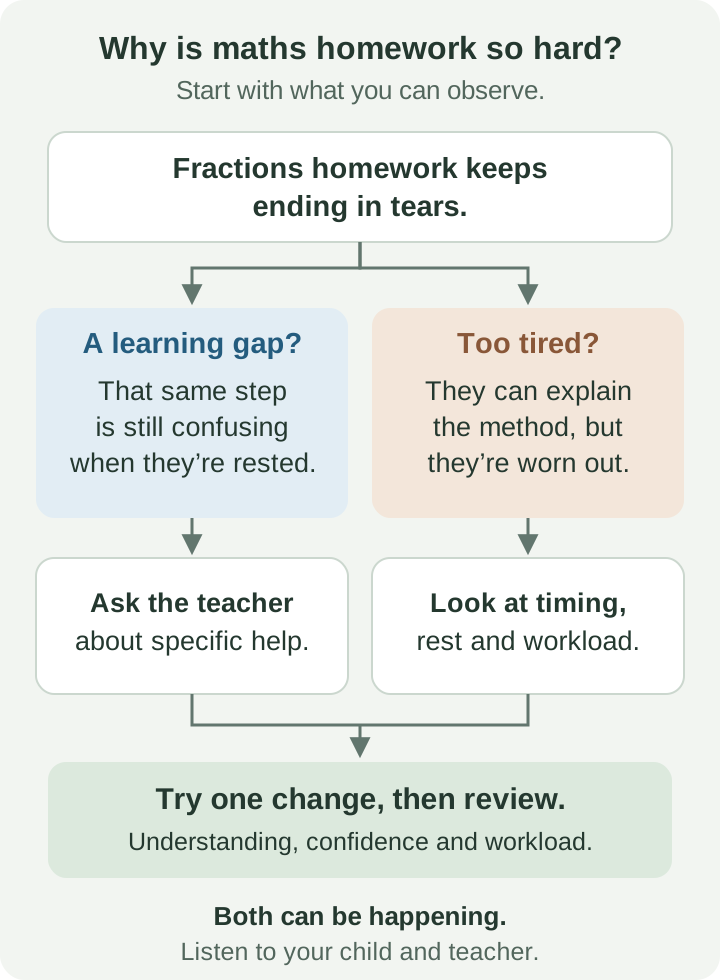
Can your child explain the method when they’re rested? Is the same difficulty showing up repeatedly, including in class? Ask the teacher what they’ve noticed and what support might help.
If your child understands the work but can barely keep their eyes open after dinner, another lesson may leave the immediate problem untouched.
Why “do more” so often wins
An extra class is a visible response. You found help, paid for it and acted.
Keeping an afternoon free can feel harder to defend. There’s no report card showing what a free Saturday gave your child.
Nearly 9 in 10 parents in the same study thought children spent too much time on tuition and enrichment. Yet 7 in 10 would spend more on their own children if they had the resources.
The fear of regret adds weight:
“What if we knew they needed help and did nothing?”
I’d be wary of letting that question settle every decision. If it does, there’s always a reason to add something, and never a comfortable point to stop.
But extra help can also ease pressure. The Straits Times reported that Evonne Chia initially chose play over tuition, then sought help when her daughter struggled in P1 and cried over spelling.
The report later described her daughter receiving Chinese tuition and no longer crying over ting xie (Chinese spelling). That’s a reminder to judge support by what it helps the child manage.
Neither “more classes” nor “less pressure” answers the question of what this child needs.
Who carries the plan?
“It’s only an hour a week.”
Plus getting there, waiting, getting home and fitting in whatever homework comes with it. If there’s a younger sibling, their afternoon may be rearranged too.

The lesson may last an hour. Someone still has to get there, wait and get everyone home.
The parent objecting may be exhausted by the arrangements. Equally, the parent pushing for tuition may be the one sitting beside the child through difficult homework every night.
Before calling your spouse anxious or unreasonable, ask what they’re dealing with that you might not see.
If you’re proposing a class, be ready to share the work. And if you oppose it, offer a realistic way to address the difficulty your spouse is seeing.
A compromise doesn’t have to be one more class
Splitting the difference between 2 classes and none gives you 1 class. It doesn’t tell you whether that class will help.
Take a child whose fractions homework keeps ending in tears. Start by checking which step is confusing and whether tiredness is making it worse.
The teacher might suggest school-based support, practice on a particular concept or extra help. Choose something that addresses the difficulty, then agree on a review point, perhaps after a few weeks or a term.
Keep the questions concrete:
- Can our child explain the method with less help?
- Are they more willing to attempt the work?
- Is the extra support manageable alongside the rest of the week?
Agree on what you’ll do if it isn’t helping. You could change the approach, reduce the workload or stop that arrangement and discuss another option.
Otherwise, “just try it first” can quietly become the rest of primary school.
Let your child speak without choosing sides
“Do you want tuition?” can be a loaded question when your child already knows which answer each parent wants.
Ask about their experience instead: “Which part do you get stuck on?” “What helps during the lesson?” “What feels hardest about Saturdays?”
Your child can describe what’s happening. The adults remain responsible for deciding what to do, including when the child needs help they’d rather avoid.
And treat their answer as information you both need, even when it challenges your preferred plan.
A child should be able to say “I need help” without one parent feeling defeated, and “I’m tired” without disappointing the other.